
Getting Started with Claude Code
Build your first automation in 30 minutes
Welcome!
You're probably drowning in invisible work. The stuff that doesn't belong in a product but still needs to get done. Usually by you. Usually late at night. Usually in a spreadsheet.
Claude Code is about to change that.
Here's what we'll cover:
Installing Claude Code (easier than you think)
Understanding what makes a good prompt
Building your first automation
Let's go!
Hi, I'm Susana 👋
I've spent the last 10+ years leading support at Airbnb, Loom, and OpenPhone. Today, I'm the Head of Community at Plain, where I help companies build modern support teams.
I've been thinking about where support is going in 2026 and beyond, and I keep coming back to this: we can't just keep responding to problems. We need to build solutions that prevent them.
The support teams who thrive won't be the ones who manage tickets best — they'll be the ones who can spot patterns, build tools to eliminate those tickets, and create systems that scale.
Claude Code was my gateway to thinking this way.
If your background is not technical like mine, don't worry. By the end of this post, you'll have Claude Code running on your computer and you'll have built your first automated tool.
Think of Claude Code as the dedicated data analyst you never got, or the ops person you've been begging for in every headcount conversation.
It won't be perfect but it will be yours, and it will work.
Who This Guide Is For
This guide is designed for support and operations professionals who want to build their own tools and automations.
You might want to use Claude Code if you:
Analyze customer feedback or support tickets regularly
Create reports by manually copying data between systems
Wish you could automate parts of your workflow
Want to build simple internal tools without waiting for engineering
Need to process large batches of files or data
You don't need technical experience. If you can describe what you want in plain English, Claude Code can help you build it.
Not sure if this is for you? Try Lesson 1. If you can follow the installation steps and build your first automation, you're ready to keep going.
My Setup
Here's what I personally use every day:
Claude Max ($100/month) - I use this because I build automations daily. If you're just starting out, Claude Pro ($20/month) will be plenty.
Cursor (free) - I like seeing files and folders visually while Claude works. You don't need this (and your terminal works just fine) but I'll show you how I use it later in the lesson.
That's it. Two things. You don't need a complicated tech stack to build powerful automations. Everything you'll see in this course comes from this exact setup.
What is Claude Code?
You're probably familiar with ChatGPT, Claude, and other AI chatbots. You go to a website, upload some files, ask questions, get answers. Maybe you use them for brainstorming, writing emails, or analyzing data. They're helpful.
But they're limited. They advise. Claude Code does.
Say you have 200 customer feedback PDFs sitting in a folder. You need to organize them by sentiment — positive, negative, neutral. Extract key themes. Create a summary report.
With Web Claude or ChatGPT:
Upload 10-20 PDFs (file limit)
Ask it to analyze them
Download the results
Repeat with the next batch
Repeat... and repeat... and repeat
Manually combine everything at the end
It works. But you're doing this manual dance every single time. Next month when you have 200 more PDFs? You start over.
With Claude Code:
Tell it: "Analyze all PDFs in the 'Customer Feedback' folder, categorize them by sentiment, and create a summary report"
It accesses the files directly on your computer
Processes all 200 at once with a script
Saves the organized results right back to your folders
Next month? Run the same command. Takes 30 seconds.
Web Claude and other LLMs are incredibly smart. They can help you think through problems. But Claude Code? It works directly with files on your computer. Handles larger batches. Lets you save workflows to repeat instantly.
Another advantage: you own everything. When you work in web Claude or ChatGPT, your conversation history lives on their servers. If the service goes down or you lose access, your context is gone. With Claude Code, everything—your files, your context, your work—lives on your computer. You can back it up, move it to another machine, or even switch to a different AI tool if you want. It's yours.
Use web Claude when: | Use Claude Code when: |
|---|---|
You want to brainstorm ideas | You have recurring tasks |
You need help writing something | You want to automate repetitive work |
You have a quick one-off question | You need to process large files |
You're working with just a few small files | You want to save time every single week |
Web Claude is like having a really smart consultant. Claude Code is that same consultant, but with keys to your office. They can actually do the work while you grab coffee.
Both are valuable. They just solve different problems.
What About Bolt, v0, Replit, and Other AI Builders?
You might have heard of (or tried) tools like Bolt, v0, Lovable, or Replit Agent. They're popular, and for good reason — you can build something impressive in minutes just by describing what you want.
So why would you use Claude Code instead?
Ownership and flexibility. That's what it comes down to.
AI builder platforms are fantastic for creating quick prototypes and demos. You describe what you want, and they generate a working application for you — often with a live preview in your browser. It's fast and feels magical.
But here's the catch: everything you build lives inside their platform. The code is wrapped in their system. Deployed on their infrastructure. Limited by their templates and constraints. Want to customize something beyond what their system allows? You're stuck. Need to export your project and host it elsewhere? Compatibility issues.
Claude Code works differently:
You own all the files on your computer
Claude writes the actual code (Python, JavaScript, whatever you need)
You can edit, customize, and deploy anywhere
No platform lock-in or export limitations
You learn how things actually work because you can see and modify everything
AI builders give you a finished product. Claude Code teaches you to build. You get complete control over what you're building.
Which should you choose?
Use AI builders if you need a quick demo, landing page, or simple app and don't care about long-term customization
Use Claude Code if you want to build something you can truly own, customize, and scale over time
For support professionals building internal tools and automations, Claude Code usually makes more sense because you need systems that integrate with your existing workflows and data — not standalone prototypes.
These tools aren't mutually exclusive, though. You could prototype an idea in Bolt to visualize it, then rebuild it in Claude Code for production use.
A Quick Note On Cost
This came up in a recent live workshop I hosted for support leaders.
You need a paid Claude subscription to use Claude Code. The free tier doesn't support Claude Code functionality. Here's how to think about the ROI:
Claude Pro ($20/month) - Pays for itself every single month when you automate a report that used to take you three hours
Claude Max ($100/month) - Pays for itself if you're automating multiple weekly tasks and getting back 5+ hours every week
Claude Max ($200/month) - Pays for itself if Claude Code becomes your daily workflow engine, running automations every single day and saving you 10+ hours per week
The skills you build today will compound as the tools get better and more capable. At current pricing, if you're saving even 3-5 hours per week, the subscription pays for itself many times over.
⚠️ Before We Start: Will This Break My Computer?!
Claude Code is a really powerful tool. It runs in your terminal, which means it can edit or delete files on your computer.
The exercises in this course use prompts and commands that I have personally used. Nothing here should harm your system.
This is still a tool that interacts with your files, though. I strongly encourage you to understand what a command does before you run it, look things up if you're unsure, and stay within your comfort zone.
As with anything technical: proceed thoughtfully.
If you want to dig deeper, Anthropic has extensive documentation on Claude Code.
Installation: Choose Your Path
There are three ways to get started with Claude Code. Pick the one that makes sense for you. This guide focuses on terminal installation. I have a Mac computer so all the screenshots and examples will reflect that setup.
Option 1: Terminal (Covered in this guide)
Install Claude Code directly on your computer
Run it from Terminal (Mac) or PowerShell (Windows)
Best for: Following this course step-by-step, learning how things work
Installation time: ~5 minutes
Option 2: VS Code Extension
Install Claude Code as an extension inside Visual Studio Code
Visual interface with integrated terminal
Best for: People already familiar with VS Code, prefer IDE environment
Learn more: Claude Code VS Code Extension Documentation
Option 3: Web Browser or Claude iOS App
Access Claude Code directly in your browser at claude.ai
No installation required, works on any device
Requires GitHub account to save your progress
Best for: Quick start, no installation, trying before committing
Learn more: Visit claude.ai and look for Code features
Which should you choose?
This guide provides detailed instructions for Option 1 (Terminal) because it gives you the most direct understanding of how Claude Code works.
If you prefer Option 2 or 3, follow the official documentation linked above — the core concepts in this course still apply, just the interface will look different.
Ready to install via Terminal? Let's go.
Terminal Installation (5 minutes)
The next five steps are the only "technical" part of this entire lesson. Once you complete them, everything else is just typing in plain English.
The install script comes directly from Anthropic. Here's a video of me installing Claude Code on my own computer from start to finish:
macOS Installation
Step 1: Open Terminal
Press Command + Space, type Terminal, and hit Enter.

(Alternatively, you can open Terminal through the Finder (Go > Applications > Utilities > Terminal) or via the Launchpad).
If you've never used the terminal before, it probably looks intimidating — a black screen with blinking text. But the terminal is just another way to talk to your computer. Normally, you interact with your computer by clicking buttons and icons. The terminal lets you do the same things by typing commands instead. Think of it like texting your computer rather than tapping buttons on a touchscreen.
When you use Claude Code in the terminal, you're essentially having a conversation with Claude. Claude can then interact with your files, folders, and applications directly. It looks technical. But you'll just be using plain English to tell Claude what you want, and Claude handles all the technical stuff behind the scenes.
Step 2: Install Claude Code
Paste the command below into your terminal and press Enter:
This installs Claude Code on its own, without needing Node.js, npm, Python, or other dependencies.
Step 3: Restart Your Terminal
Close and reopen Terminal so the PATH updates.
Step 4: Verify the Installation
Paste the command below into your terminal and press Enter:
You should see the current version number.
Step 5: Launch Claude Code
Finally, paste the command below into your terminal and press Enter:
Sign in when prompted.
Windows Installation
Step 1: Open PowerShell
Press the Windows key, type PowerShell, and hit Enter.
Step 2: Install Claude Code
Paste the following command and press Enter:
This installs Claude Code as a standalone executable.
Step 3: Restart PowerShell
Close and reopen it to refresh your environment.
Step 4: Verify the Installation
Paste the following command and press Enter:
You should see the installed version number.
Step 5: Launch Claude Code
Paste the following command and press Enter:
Claude Code is now installed and verified on your computer! 🎉
Let's Build!
Now that the hardest part (confronting the terminal) is behind you and Claude Code is installed via the terminal, you can use it there or you can launch it in Cursor using the integrated terminal.
This is my preferred way of working as you can preview files and keep an eye on your folder structure.
Understanding Cursor (Optional but Recommended)
Cursor is a code editor — basically a fancy text editor that developers use to write and organize code.
You can absolutely use Claude Code directly in your terminal — it works perfectly fine. But I prefer using Cursor because it shows you:
What files Claude is creating (in real time)
Where those files live (your folder structure)
What's inside each file (you can click and preview)
You can download Cursor for free at cursor.com/download
The Cursor team just released this awesome onboarding guide for non-technical folks looking to understand how to use it. This is one of their videos where they explain the Cursor interface:
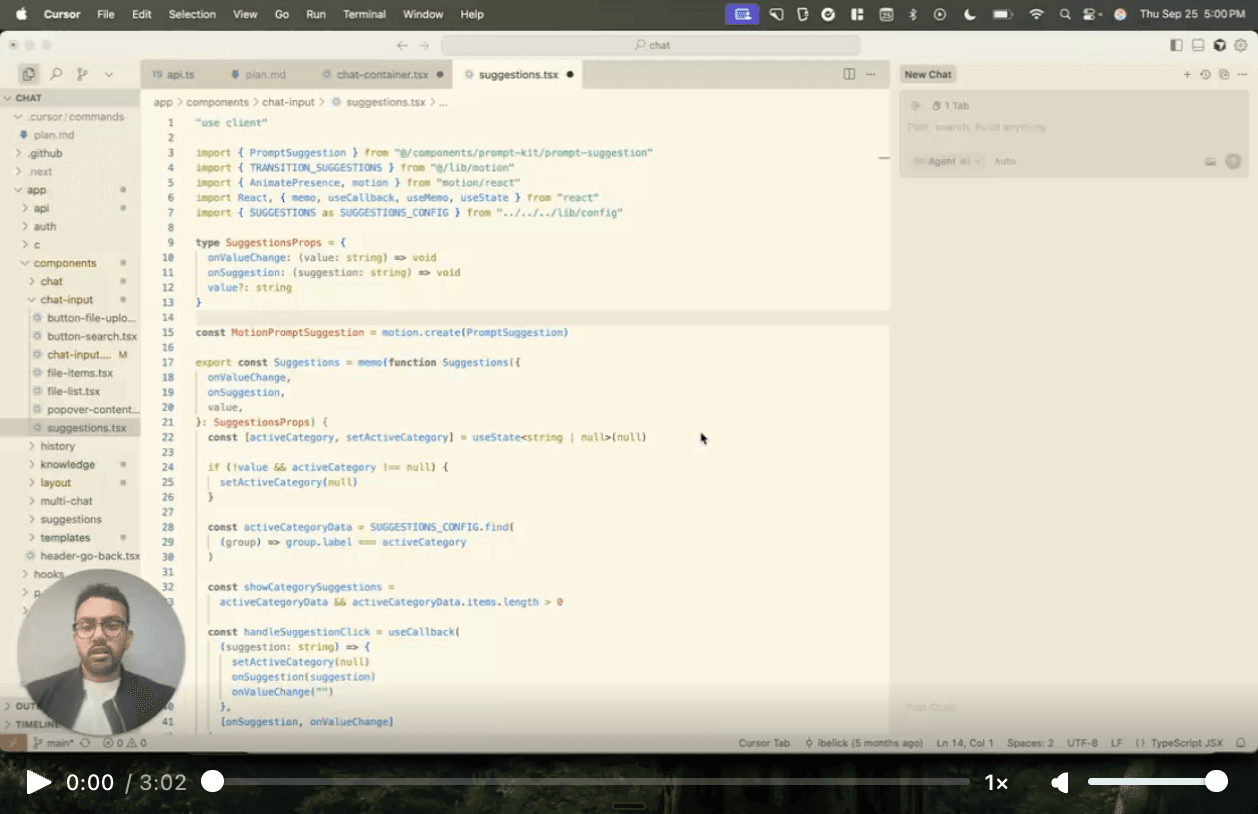
How to launch Claude Code in Cursor:
Open Cursor
Click Terminal in the top menu, then select New Terminal
Type
claudeand press EnterStart chatting with Claude!
When you ask Claude to "create a folder called customer-feedback and organize these files" you can literally watch it happen in the left panel. When Claude writes a script or creates a document, you can click it and see what's inside.
Do you need Cursor?
No. But it makes the experience much more intuitive, especially when you're learning. You can always switch to terminal-only later if you prefer.
Your First Quick Win: 2-Minute Automation
Here's your first task. It's deliberately simple, but it's real and it demonstrates something web Claude can't do: work directly with files on your computer.
Let's ask Claude Code to create a file inventory report from your Downloads folder (or whatever folder you prefer).
⚠️ Please note that if the folder you choose has thousands of files, this may take a long time and/or cost you some money (if you're using the API). For this task, I'd recommend choosing a folder with less than 200-300 files.
Make sure Claude Code is running
If you closed it, open Terminal (or Cursor's terminal) and type claude to start it again.
Copy and paste this prompt
Press Enter and watch
Claude will:
Create a new folder called 'first-lesson' on your Desktop
Access your Downloads folder and read all files
Generate a structured CSV file with the inventory
Save it in the folder it just created
Here's a video of what happens when I do it (using Terminal):
What Just Happened?
You gave Claude Code a plain English instruction, and it:
Created a folder on your computer (file system control)
Accessed your Documents folder directly (something web Claude can't do)
Analyzed all the files and extracted metadata
Generated a structured CSV file with organized data
Saved it in the folder it created
Why this matters: Web Claude could help you think through how to organize files. But it can't touch your actual files. Claude Code can read them, analyze them, and create new files. All from a simple English description.
What if I want to build something that requires Python or JavaScript?
Claude Code itself doesn't need Python or Node.js, but if you create a Python script or Node.js project, you'll need those languages installed to run them.
Don't worry about this now; Claude Code will tell you exactly what you need when the time comes. You can install things gradually as they become relevant.
Try These Variations (Optional)
If you want to experiment more, try these prompts:
Each one takes seconds and gives you actionable insights about your files.
Congratulations, First Automation Complete!
You've completed Lesson 1.
Let's review what you accomplished:
✔️ Understand what Claude Code is and why it matters for support professionals
✔️ Install Claude Code on your computer
✔️ Verify the installation works
✔️ Set up your workspace (Terminal or Cursor)
✔️ Build your first automation (your quick win!)