
Introducing: Sidekick Tools

Last Updated
Published On
Agentic support starts with tools
Debugging a support thread takes 3 tools, 5 context switches, 10 tabs, 20 minutes and at least 1 mental breakdown. Sidekick solves that.
Most support AI products focus on the conversation itself but replying to the customer is rarely the slow part of the job. The investigation still happens somewhere else.
Support teams spend their day moving between logs, tickets, analytics, bug reports, and internal docs to reconstruct what actually happened.
We shipped Tools for Sidekick, an internal AI agent that connects directly to the systems your team already uses.
The goal is simple: keep the support team in the customer conversation while the investigation happens in parallel.
Investigation happens in parallel
The operational cost of support is easy to underestimate because it arrives in small fragments throughout the day.
A typical investigation pulls support teams through the same loop repeatedly: opening the ticket, checking logs, searching past issues, reviewing analytics, asking engineering for context, then returning to the customer with an updated understanding of the problem.
Each lookup only takes a minute or two. Across a shift, that overhead compounds into a meaningful amount of lost time and attention.
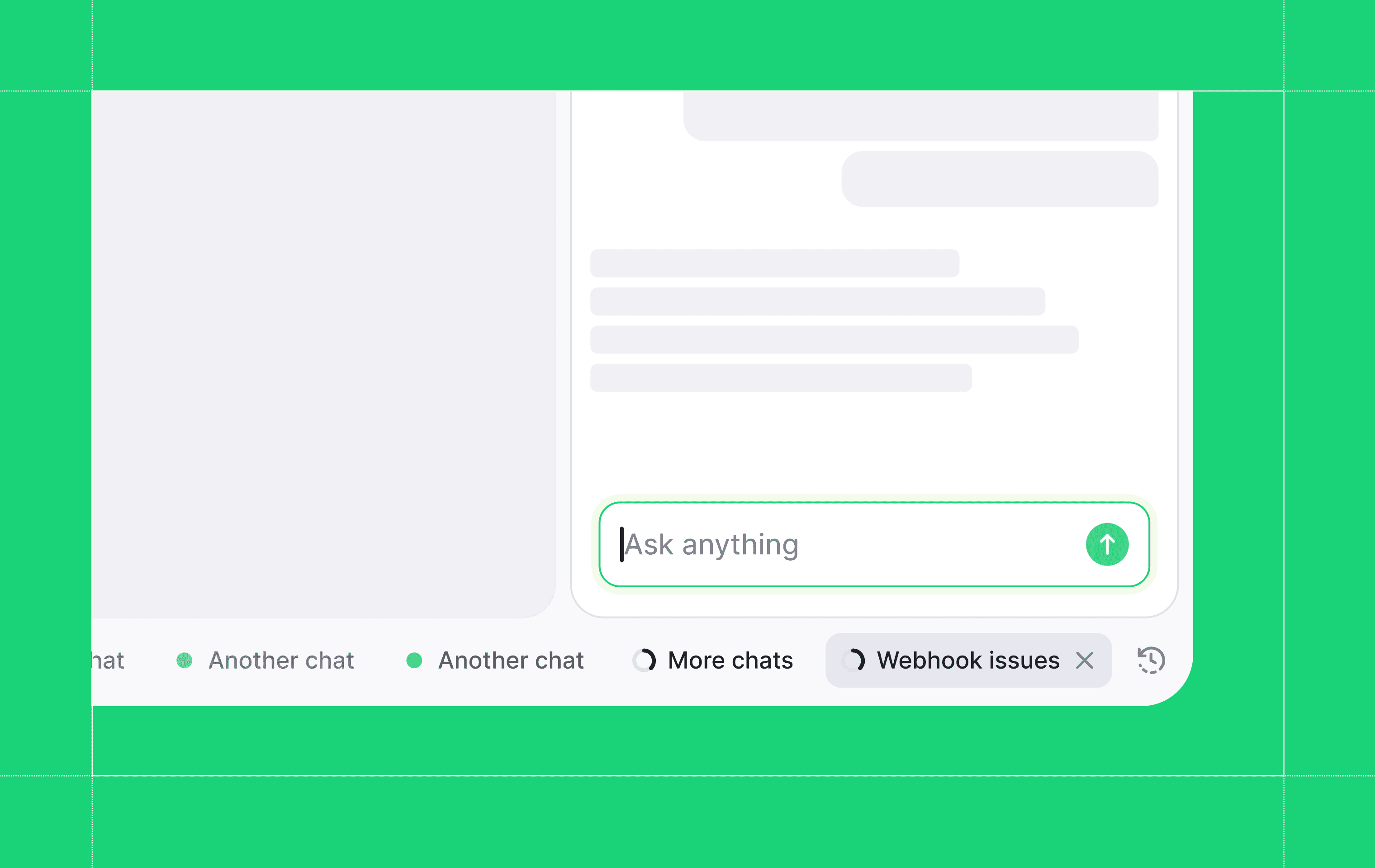
Sidekick handles those round trips while the support rep stays focused on the customer.
Ask, “Is this customer’s sync still failing?” and Sidekick checks Datadog and returns the result.
Ask, “Have we seen this error before?” and Sidekick searches Linear for related incidents, escalations, and known fixes.
The workflow changes when investigation no longer requires constant navigation between tools.
Pattern recognition becomes operational infrastructure
Strong support teams run on pattern recognition. Senior support engineers develop an internal map of the product over time. They recognize recurring failure modes, remember past incidents, and know which symptoms point to deeper issues.
That knowledge compounds slowly, so newer team members often need months before they can investigate with the same confidence and speed.
Most support organizations eventually run into the same problems: duplicate escalations, inconsistent answers, repeated investigation work, and senior engineers becoming the default source of institutional knowledge.
With Sidekick connected to systems like Linear and the codebase, that accumulated context becomes queryable.
Teams can ask whether an issue has appeared before, which workaround was recommended, whether the problem was already escalated, or which customers were affected recently.
Junior support reps can investigate using patterns the organization has already learned.
Over time, the support organization becomes more consistent because operational memory is no longer trapped inside individual people.
Support becomes a company memory layer
Support teams sit closer to customer reality than almost any other function in the company.
They see friction before churn appears in a dashboard, hear feature requests before roadmap discussions happen, and notice changes in product usage long before quarterly metrics do.
Most of that context disappears into support requests, fragmented notes, and disconnected systems.
From a company page in Plain, Sidekick can answer questions about recurring themes, unresolved requests, changing product usage, and issues that keep resurfacing.
That context changes the quality of customer conversations across the company.
QBRs become grounded in actual support history, renewal conversations carry operational context, and product and success teams gain a clearer picture of customer friction without stitching the information together manually.
The important architectural decision
Connecting tools to an agent is no longer novel. The harder problem is teaching the agent how to operate effectively inside each tool.
Every system carries its own conventions and workflows. Linear should be searched differently from Datadog. Internal documentation follows patterns unique to each organization.
Teams develop operating rules over time: always cite the Linear issue ID, ignore archived projects, prioritize customer-facing incidents, or prefer workarounds that support has already validated.
That is why we built workspace-level instructions for Sidekick. You define guidance that teaches the agent how your team actually works, applied across all your connected tools. The value comes from adapting to the systems, workflows, conventions, and practices inside the organization.
The best support agents will succeed because they understand how the organization investigates, escalates, prioritizes, and makes decisions.
Give it a try
If you're already using Plain, Tools for Sidekick lives in Plain AI → Sidekick → Integrations.
Teams can connect their existing tools, define guidance for each integration, and let Sidekick handle much of the investigative overhead while support reps stay focused on the customer conversation.
If this is the kind of support organization you want to build, we’d love to talk.