
We're working with select design partners on the experience of bringing your agent into Plain. In this period, bring your own agent is free to use.If you would like to be a design partner, please get in touch at help@plain.com
Bring your agent and run it inside Plain, either to handle threads on its own or to assist your team. Plain gives you the APIs and the surfaces in the app; you build the agent. Because Plain is API-first, your agent can do anything a user can do without restrictions. Depending on your requirements, building your own agent has some advantages over using Plain’s built-in agents:
  • You control the harness, model, architecture, prompts, context, and behavior.
  • You can give it access to internal systems you would not grant a third party.
  • You can reuse an agent your team already runs elsewhere, such as in Slack.
  • You control what it spends on model calls.
If you’d rather not build one, Ari and Sidekick ship as part of Plain, and several third-party agents are also available.

Example agent types

Your agent can work threads, reply to customers, and help the users on your team. What it should and shouldn’t do is up to you. These three shapes are the most common.

Internal assistant agent

Internal assistant agent
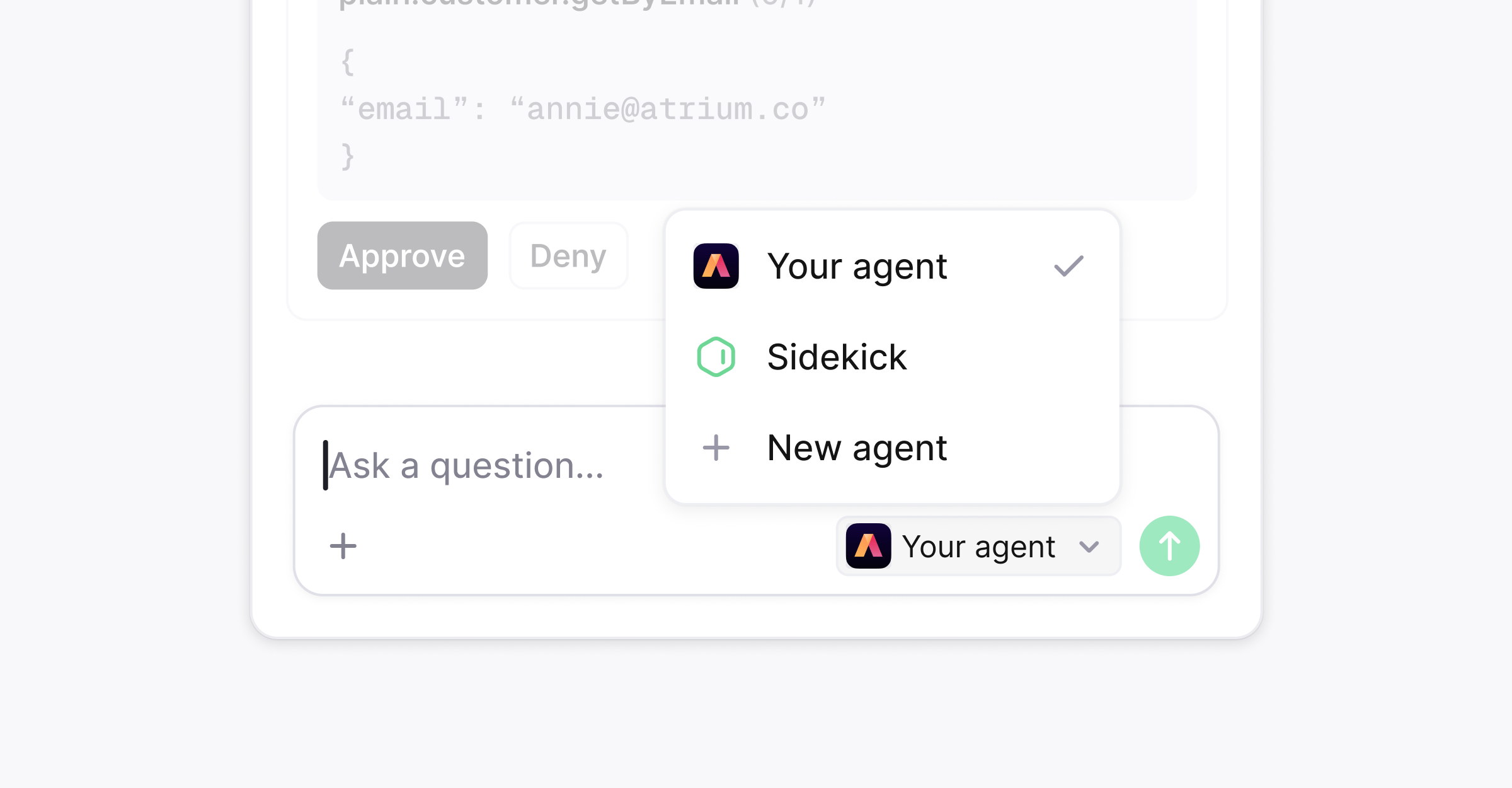
Talk to an agent from any page in Plain: click Ask Sidekick and pick your agent. The button then shows your agent’s name. From there it can answer a thread, work through a task, update your Help Center or take other actions. An internal agent normally doesn’t write to customers directly, allowing you to give it access to sensitive tools and data sources.

Support agent

Support agent
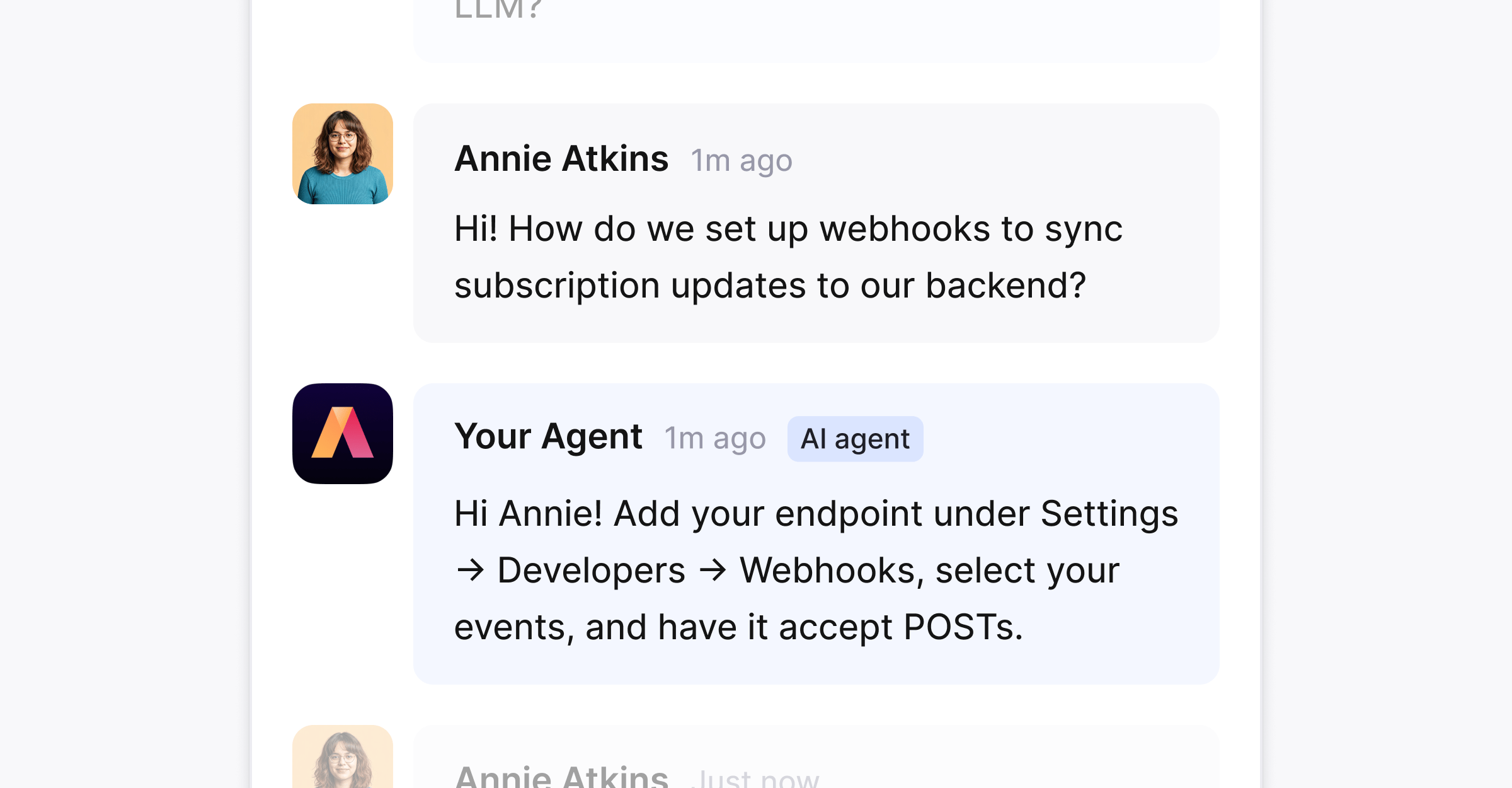
A support agent handles threads end to end. Assign it to a subset or all of your threads with a workflow, and it replies to the customer the way a user on your team would. Because it writes to customers, a support agent normally has narrower access to internal tools and instead relies on your own documentation as the source of its answers.

Triage agent

Triage agent
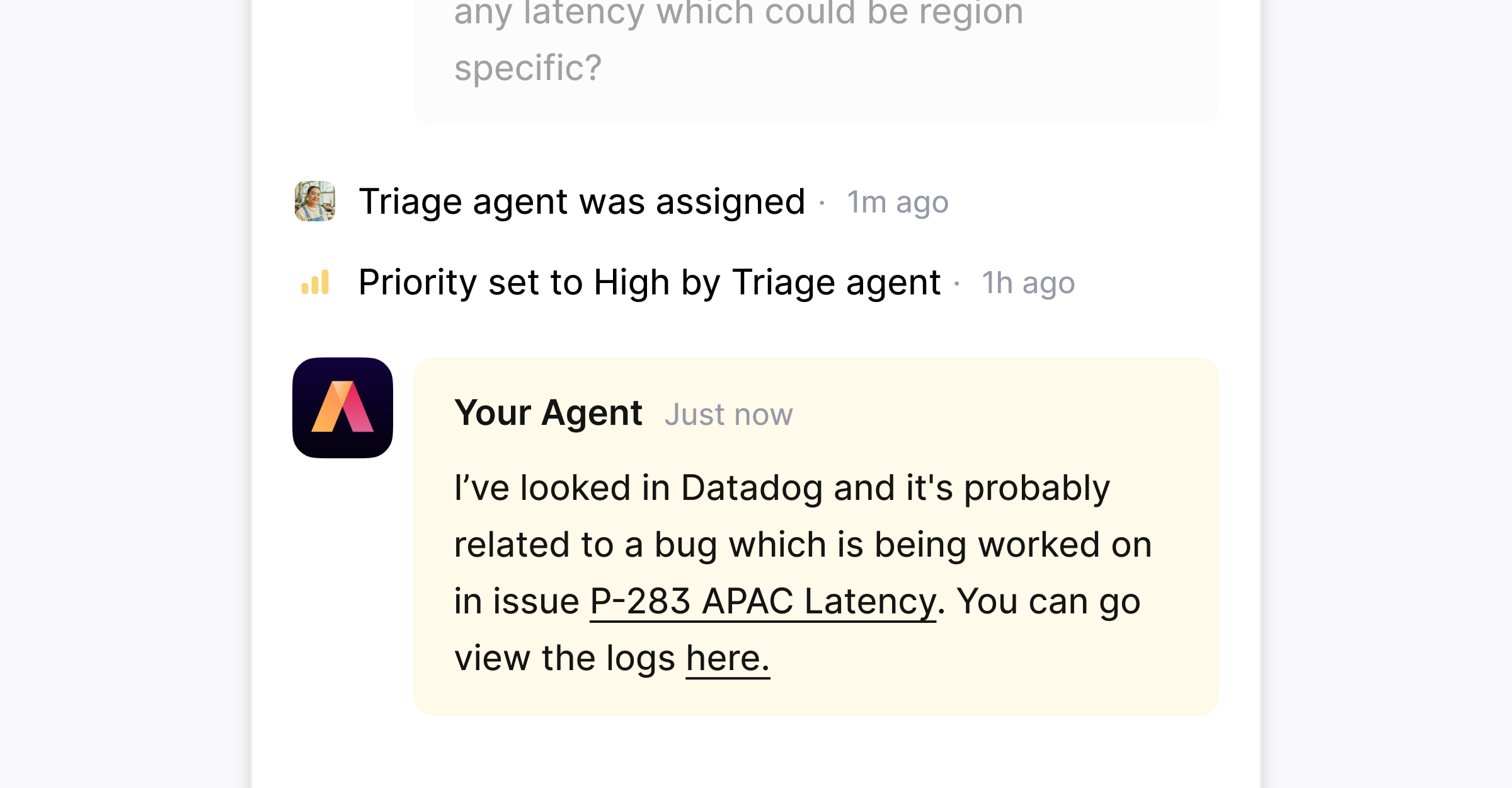
A triage agent investigates every new thread before a user opens it. It sets the thread’s priority and posts an internal note with what it found, so your team picks the thread up with the work already started.

Credits

Each connected agent uses a fixed number of credits from your workspace’s monthly allowance:
  • Connected agent discussion: 15 credits each time a discussion with the agent starts, however long it runs
  • Connected agent thread assignment: 15 credits each time you assign the agent to a thread, regardless of how long or how many times it’s involved
See How credits work.

Build your agent

Learn about how to bring your own agent to Plain in our technical documentation.