
Foundation syncs up to 25 Slack channels. Horizon and Frontier sync unlimited channels. See plans and pricing.
Set up Slack
1
Connect your Slack workspace
In Plain, go to Settings → Channels → Slack and click Connect to Slack. Follow the prompts to authorize the right Slack workspace.Grant permission for replies to be sent from your Slack profile. This is what lets Plain replies appear in Slack under your name.
2
Add Plain to the right channels
In Settings → Channels → Slack, set up auto-join rules that match your channels by prefix or suffix.To add a channel by hand instead, open it in Slack, type
/invite, select Add apps to this channel, and choose Plain.Each channel can be a Customer channel, a Discussion channel, or disabled. Set this in Settings → Channels → Slack.3
Reply from Plain
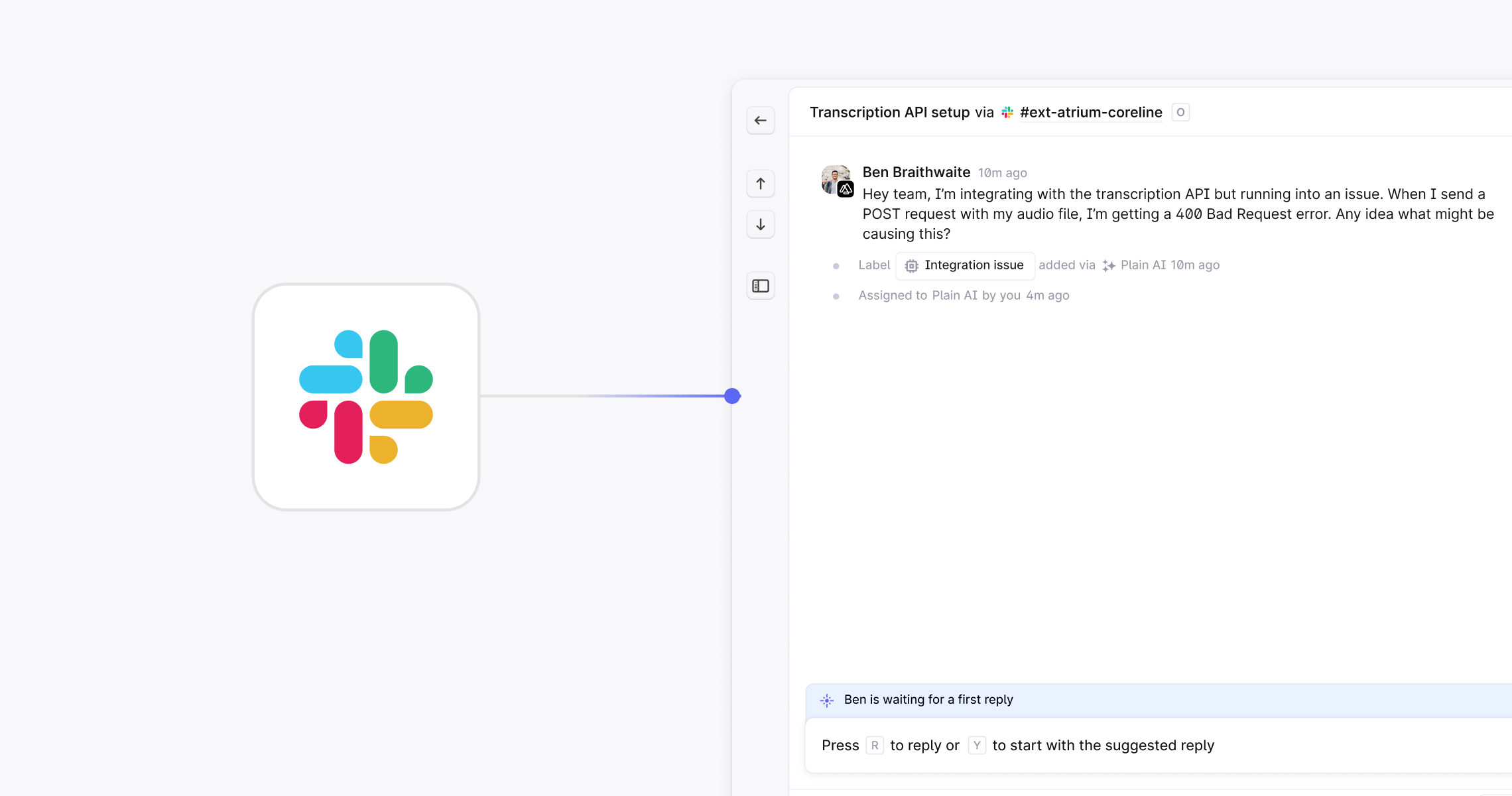
Messages from connected channels appear as threads in Plain. Type your response in Plain and it posts back to Slack as if you typed it there.Ingestion modes control which messages become threads, so a busy channel does not have to create one per message.
Manage connected channels
Settings → Channels → Slack lists every channel the Plain bot has joined, one list per connected Slack workspace. Each row sets that channel’s type and ingestion mode. Three controls sit above the list:- Search channels: filters the list by channel name
- Type: narrows the list to Customer, Discussion, or Disabled channels
- Ingestion mode: narrows the list to one or more modes, including Team default for channels with no override
11 of 34, is how many rows your current search and filters show out of the total. It is not a quota. Your plan caps enabled customer channels separately, and Plain shows a notice at the top of the page once you reach that cap.
Select rows with the checkboxes to change the type or ingestion mode of several channels at once. A private channel you are not a member of appears locked, so ask to be invited in Slack before you manage it.
Sidekick in Slack
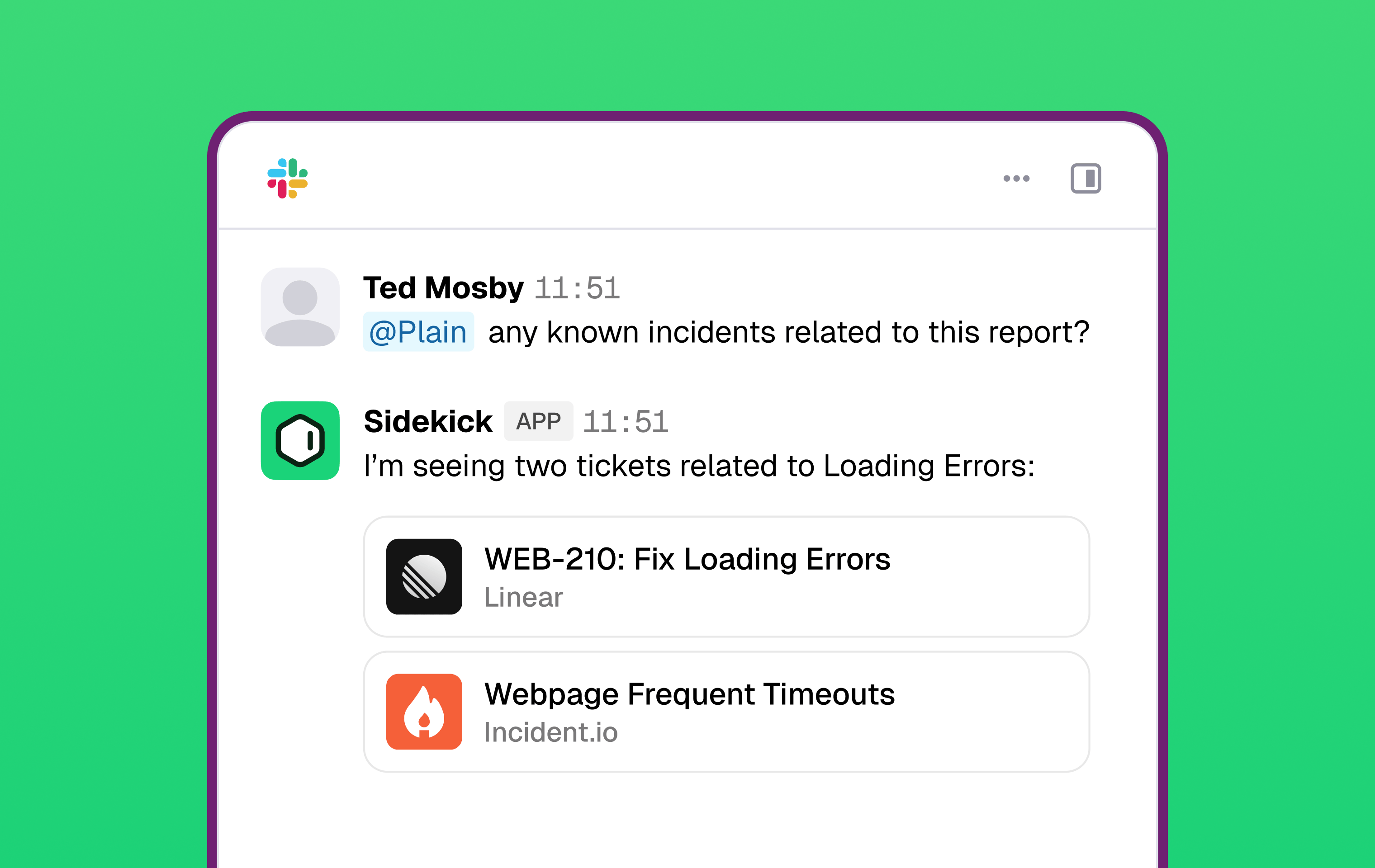
Sidekick, Plain’s assistant agent, works from Slack. Mention Plain in a connected channel and it answers there, with access to your knowledge sources, tool integrations, and support history. Sidekick posts under its own identity and avatar, so it is clear when a reply came from AI rather than a person. To enable it, a workspace Admin or Owner goes to Settings → AI → Sidekick → Integrations → Slack. Plain then creates an#ask-plain channel. Sidekick is active in every discussion channel and never in a customer channel, so to add it to a channel such as #engineering or #incidents, invite the Plain bot there and set the channel’s type to Discussion in Settings → Channels → Slack. See Sidekick in Slack for the full setup.